By Murray Sherriffs
A Canadian-led study says that the long-standing assumption in cancer care—more treatment is better—should be challenged.
Researchers say that what they have discovered might change how an estimated two million women with early-stage breast cancer are treated each year.
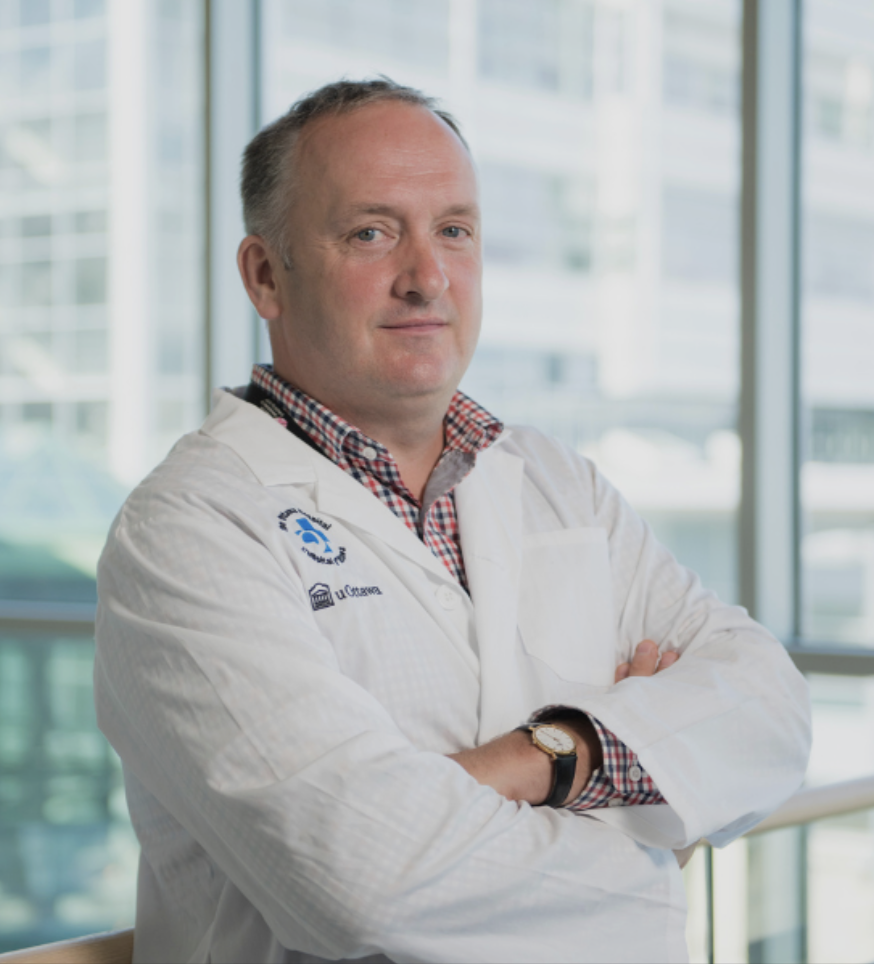
Dr. Mark Clemons, oncologist at Ottawa hospital and a member of the study team says that “…the results have been an absolute slam-dunk, affecting the care of around 30,000 Canadian patients a year and two million patients globally every year.”
The test began with a simple question: Can patients safely receive far less treatment with a similar long-term effect?
The answer appears to be “Yes!”
The trial studied the use of zoledronic acid, a drug often given to women with early-stage breast cancer.
Studies from more than a decade ago found that it reduced the risk of the cancer spreading to the bones.
Current guidelines typically recommend that the medication be given intravenously, every six months, for three years, for a total of seven infusions.
The Canadian researchers asked a provocative question: “What if only one dose is enough?”
The study followed 211 women with early-stage breast cancer, who were post-menopause. Half received the recommended seven doses of zoledronic acid; the remaining women who received a single infusion.
Scientists report that when they followed up with both groups of women after five years, they found no meaningful difference in cancer recurrence, cancer spread and death.
Plus, the patients who received just one treatment experienced fewer side effects, fewer hospital visits and less disruption to their lives.
Patients no longer need to come back to the cancer centre every six months for three years.
A single infusion means less toxicity, fewer blood tests as well as more time with family and loved ones.’
Researchers have long known that zoledronic acid remains in bone tissue for a long time, which led scientists to launch this research.
Clemons says that “…we knew that a single infusion would stay in the body for 10 years, so it made no sense giving the drug every six months.”
The challenge was convincing patients to participate in a trial that reduced treatment, because it runs counter to the prevailing wisdom that more aggressive treatments are better.
Zoledronic acid belongs to a class of medications known as bisphosphonates.
The drug is used to strengthen bones and to cut the risk of cancer spread in post-menopausal women with breast cancer.
The findings are part of a growing movement within oncology known as “de-escalation”.
Rather than asking whether more treatment can improve outcomes, researchers are increasingly asking whether less treatment can achieve the same results, while reducing toxicity and sparing patients the repeated bouts of fatigue and other side effects after repeated treatments.
Upends ‘more is better’ mentality
Oncologist Dr. Bishal Gyawali, an associate professor at Queen’s University in Kingston, Ontario, says that the shift reflects a broader change in cancer care philosophy.
“The whole field of oncology is usually focused on what more we can do for our patients. Can we give more drugs? Can we give higher doses? Can we give it more frequently?”
For decades, cancer treatment was guided by a belief that maximum treatment would produce maximum benefit.
Gyawali contends that this is “…flawed thinking. The goal is not just to shrink the tumour, but to live as long a life as possible with a good quality of life.”
Some cancer interventions may extend survival by a small amount but at significant personal cost.
“Those couple of months could be very miserable months in the ICU, in the emergency department and in the hospital, not being able to spend time with loved ones. We have now come to a realization we are probably over-treating patients.”
The zoledronic acid trial fits squarely within that trend, with cancer specialists convinced that the results tell an important story that patients should discuss with their oncologists.
“Based on the cumulative evidence, this study is enough to convince me, a single dose should be enough for most patients who meet the criteria for the trial.”
Gyawali is part of an international group of scientists, who established Common Sense Oncology, an association that promotes investigating better dosing for patients and improving their quality of life.
The broader de-escalation movement has been gaining momentum across cancer care.
Researchers are studying shorter courses of radiation therapy, lower doses of medications, less extensive surgery and more-personalized treatment strategies.
The goal is not to compromise outcomes, but to optimize treatment and maintain effectiveness while reducing harm.
The Canadian study also stands out because it was not funded by the pharmaceutical industry, rather, it was supported by charitable funding from groups like the CURE Foundation, the Ottawa Hospital Research Institute and the Ottawa Hospital Foundation.
The study is published in the journal NEMJ Evidence.
